This is a telegram from the US Embassy in Costa Rica to the State Department. Noting that there have been no recent reports indicating an intent to activate Operation Condor, the telegram tells the State Department that no further action should be taken.
Archivos de acervos estatales
Título: Argentine security forces capture two Chilean leftist leaders, Patricio Biedman and Mario Espinosa
This is a CIA report which mentions that Argentine security forces had captured Patricio Biedman, leader of the Chilean Leftist Revolutionary Movement (MIR) and Mario Espinosa, the MIR's delegate to the Revolutionary Coordinating Junta (JCR).

The CIA reports that, on 1 September 1976, an 'International Desk' was created within the National Intelligence Center in Argentina for investigating, identifying, and destroying Argentine 'subversives' with links to international guerrilla organisations, such as the Revolutionary Coordinating Junta (JCR). Its activities will be limited to Argentina, as the desk lacks the means to carry out intelligence tasks in other countries.
The CIA reports that plans are going ahead for a training course in Buenos Aires for agents of the three Condor countries which will operate in France.
Following the assassination of the former Chilean Ambassador to the US, Orlando Letelier, the CIA postulates that some of the Condor services may have decided to undertake offensive actions on US soil. The CIA had distributed background information on Operation Condor to the State Department and FBI.
This FBI cable outlines the three phases of Operation Condor, according to a confidential source from the Argentine Army Intelligence Service. Notably, the document states that- as part of phase three- a special team had been organised in Argentine comprising members of the Argentine Army Intelligence Service and the State Secretariat for Information (SIDE), which was being prepared to carry out future operations in non-member countries. The document states that the assassination of Chilean diplomat Orlando Letelier in Washington may, therefore, have been carried out as a third phase action of Operation Condor.
Título: Secuestro y traslado de uruguayos Jorge y Maria Emilia Zaffaroni por fuerzas argentinas y uruguayas
Este documento del Batallón 601 de Argentina registra el secuestro y traslado de los ciudadanos uruguayos, Jorge y Maria Emilia Zaffaroni.
The cable from Madrid requests the FBI Legal Attaché in Buenos Aires if the information contained in Retel [Chilbom cable dated 28 Sept 1976] can be passed to select Portuguese sources and other responsible US intelligence agencies.
This is a report by the US Bureau of Intelligence and Research (INR) written by J. E. Buchanan, who was an analyst there between 1974 and 1976 specialising in South American political stability and counterterrorism. The report is not dated but given Buchanan's time at the INR and temporal references within the text, we have estimated it to be from October 1976. The report focuses on two trends have placed the United States and some key Latin American countries on an apparent collision course: the authoritarian tendencies and tactics employed by Latin American countries in the fight against subversion, and the concern in the US about what an appropriate relationship between the USG and governments that do not meet internationally recognised standards in protecting the human rights of their citizens. This extensive 16-page-long report also discusses the JCR on pages 3 and 4.
This document contains intelligence from the Legal Attaché of the US Embassy in Argentina. Notably, it mentions that a special team is being trained in Buenos Aires to conduct Phase Three Condor operations in non-member countries. The team is composed of members of the Argentine Army Intelligence Service and the State Secretariat for Information. Their structure resembles that of a US special forces team.
Transmite un listado de nombres de ciudadanos/as argentinos/as que están siendo buscados/as por parte de las autoridades policiales y militares de la República Argentina por haber cometidos acciones subversivas. Requiere que se detengan de manera inmediata y se informe a esta agencia aquellos ciudadanos que se encuentren en el país de forma clandestina, mientras que aquellos que se encuentran de manera legal serán localizados, mantenidos bajo vigilancia cerrada, informando asimismo a la agencia. No aparece ningún nombre pero hay una estampilla del Ejército .
This Weekly Summary published by the CIA focuses on cooperation among the military regimes of South America. Although Operation Condor is not mentioned, it traces the original impetus for increased cooperation back to the Chilean coup in 1973, when the Chilean regime was anxious to acquire friends and military equipment for protection against a perceived threat from Peru.
El pedido de búsqueda se refiere a dos ciudadanos argentinos, Ricardo Luiz Franco y Maria Catalina Benassi, acusados de pertenecer a la organización subversiva ERP (Ejército Revolucionario del Pueblo) y que estarían viviendo en Porto Alegre. Se solicita la localización y detención de las dos personas y otros datos de relevancia. El documento no está firmado pero hay una estampilla del DOPS de Rio Grande do Sul.
Título: Intelligence information about the two disappeared employees of the Cuban Embassy in Buenos Aires
This memo relates how a source - connected with one of the Argentine intelligence services - provided on 18 September 1976 information about the two employees of the Cuban Embassy in Buenos Aires, Jesús Cejas Arias and Crescencio Galañena Hernández, abducted in August 1976. According to the source, both have been assassinated and their bodies thrown in a large drum into the Rio Lujan near Puente Colorado in San Fernando, Buenos Aires Province. The location where the two bodies were dumped had been used in the past to dispose of other bodies by the State Secretariat for Information (SIDE).
In this telegram, the US Embassy in Montevideo informs the State Department in Washington that rumours are circulating among the intelligence community regarding the alleged kidnapping of Uruguayan exiles, including the daughter of Uruguayan politician, Zelmar Michelini, in Argentina in July 1976. The Argentine security forces turned over some of the detainees to the Uruguayan security forces for questioning.
This telegram from the US Embassy in Uruguay to the State Department reports on the propaganda campaign by the Uruguayan military regime announcing the capture on 28 October 1976 of 62 militants belonging to the Party for the Victory of the People (PVP).

Circular No 24/76 procedente de la Dirección para Asuntos de Política Exterior, de fecha 29 de octubre de 1976, en la que se adjunta el Comunicado de Prensa Especial No 21 de las Fuerzas Conjuntas. En el mismo se detallan las acciones de la agrupación Partido por la Victoria del Pueblo (PVP) y operativo en que resultaron detenidos varios integrantes.
Ubicación: Dpto. de Archivo Histórico – Diplomático – Sección: Embajada de la ROU en Argentina / Serie: Actividades Subversivas / Año 1976 / Caja 2 / Carpeta A6-1/ 13 fojas.
This telegram from the US Ambassador in Uruguay to the Secretary of State in Washington reports on the round up of militants from the Party for the Victory of the People (PVP) by the Uruguayan military regime. This includes the arrest of 22 PVP militants in Argentina and their subsequent refoulment to Uruguay. It reports on the cooperated psychological warfare between the Argentine and Uruguayan military regimes used to cover up the appearance of PVP militants disappeared in Argentina through the media.
In this document, the US Ambassador to Argentina reports on the return to Uruguay of PVP militants exiled in Argentina. According to the UNHCR, 12 out of 14 of the names on the list refer to Uruguayan refugees kidnapped in July and September 1976 and at least 40 more Uruguayans were disappeared during this period. The US Ambassador contends that the evidence and reports available to the Embassy convincingly show that the kidnappings of Uruguayan refugees in July and September were carried out by Uruguayan and Argentine security forces, acting clandestinely and in cooperation.

Circular No 25/76 procedente de la Dirección para Asuntos de Política Exterior, de fecha 5 de noviembre de 1976, en la que se adjunta el Comunicado de Prensa Especial No 22 de las Fuerzas Conjuntas. En el mismo se continúa informando sobre las acciones de la agrupación Partido por la Victoria del Pueblo (PVP).
Ubicación: Dpto. de Archivo Histórico – Diplomático – Sección: Embajada de la ROU en Argentina / Serie: Actividades Subversivas / Año 1976 / Caja 1 / Carpeta A1-2-1/ 15 fojas
The CIA reports that the training course for Condor officers in Buenos Aires is currently underway and due to conclude by early December 1976.
Título: Condor activities continue
This report mentions that a training course is taking place in Buenos Aires and will conclude in early December 1976. Two Uruguayans are expected to travel to Paris to perform unspecified activities. After allegedly finding out that the French knew about Operation Condor, Argentine and/or Chilean security officers informed the French security forces that Condor's operations in Europe would exclude France.
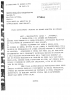
El Ministro consejero en la Embajada brasileña en Buenos Aires en 1976, Marcos Camilo Cortes, dirige el telegrama al ministro de Relaciones Exteriores para transmitir informaciones relativas al fallecimiento del expresidente João Goulart. Según información recibida del cónsul en Paso de los Libres, Ney Faria, el expresidente habría muerte en consecuencia de un ataque cardíaco en las cercanías de la localidad de Mercedes. Como todas las disposiciones necesarias se están realizando en el ámbito consular y directamente en la región fronteriza, Cortes va a abstenerse de contactar oficialmente a las autoridades argentinas a menos de recibir instrucciones desde el Ministro.
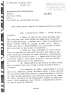
El Ministro consejero en la Embajada brasileña en Buenos Aires en 1976, Marcos Camilo Cortes, dirige el telegrama al ministro de Relaciones Exteriores para notificar de la llegada del cuerpo del expresidente Goulart a la ciudad argentina de Paso de los Libres y comunica que el cónsul brasileño en esa ciudad, Ney Faria, confirmó haber tomado ya todas las medidas consulares posibles, pero deseaba solicitar instrucciones del Ministro sobre los "aspectos delicados del caso." Cortes aconseja al Ministro que, si tuviese que enviar instrucciones especiales al cónsul Faria, se intentara la transmisión a través de la radio del Ejército debido a las dificultades de comunicarse telefónicamente con Paso de los Libres.
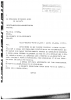
El Ministro consejero en la Embajada brasileña en Buenos Aires en 1976, Marcos Camilo Cortes, informa que el Cónsul en Paso de los Libres comunicó que el ataúd del expresidente Goulart había cruzado el puente internacional a Uruguaiana y de ahí seguiría rumbo a Sao Borja. El Cónsul agregó que todo había acontecido perfectamente, inclusive en Uruguaiana.
This CIA document reports that a mixed Condor team of agents returned to Argentina after a failed operation against three targets in a country whose name was redacted [likely France]. The Condor team is convinced there was a leak of information about their operational plan.
This document records a conversation with the Regional Representative of the UNHCR, Robert Muller, following his 14-month-long visit to Argentina. Muller claims that, of the 14,000 refugees mandated by the UNHCR, around 2,000 have been resettled outside Argentina, whilst another 2,000 have left on their own. The report highlights that UNHCR relations with government officials have improved owing to a certain level of cooperation to remove refugees out of the country.
Título: Meeting of Condor member countries in December 1976 to discuss psychological warfare operations
This CIA report discusses a meeting of Condor member countries which took place from 13 to 16 December 1976 in Buenos Aires. The main issue on the agenda was the discussion and planning of coordinated psychological warfare operations against political opponents in various member countries.
The CIA report notes that Operation Condor has faced problems over the accomplishment of responsibilities. Particularly, larger countries are failing to meet the expectation of providing greater human and financial resources than smaller member countries. Thus, the development of the Condor organisation has been stymied. Countries with greater resources are primarily interested in working against their own terrorists.
Nota 001/77 Conf. de fecha 21 de enero de 1977, procedente de la Embajada de Uruguay en Estados Unidos, dirigida al Departamento de Estado de Estados Unidos, manifestando el retiro de la propuesta de designaciones del Cnel. Fons y del Mayor Gavazzo para cargos a desempeñar en ese país.
Ubicación: Dpto. de Archivo Histórico–Diplomático del Ministerio de Relaciones Exteriores de Uruguay » Sección: Embajada de la ROU en Estados Unidos » Serie: Notas Confidenciales » Año: 1977 » Caja: 7 » Carpeta: 5
The document claims that the assassination of the former Chilean Ambassador to the US, Orlando Letelier, had shown the Condor countries that political assassinations of ‘extremists’ abroad had detrimental effects on Condor countries. It warns that such future activities would result in retaliatory measures by the US against the accused country.
The CIA reports that all countries belonging to the Condor organisation use a dedicated cyphered communications system. Call signs have been assigned to each member country. The document is heavily redacted and only the call sign for Argentina can be read: 1.
This CIA report affirms that the then Director of the Argentine State Secretariat for Intelligence (SIDE), General Carlos Enrique Laidlaw, had been named the new Chief for Operation Condor at the last meeting of Condor representatives in Buenos Aires. The document also reveals that, in the field of psychological warfare, Operation Condor was making extensive use of the communications media of the member countries.
This CIA report claims that a general conference of Condor member countries is scheduled to take place in late February 1977 in Buenos Aires, Argentina. Each member country will be represented by a chief of delegation.
This document reports that, during a meeting in Santiago in May 1976, Condor member countries committed to forming a unit called 'Teseo' to combat members of the leftist Revolutionary Coordinating Junta (JCR) and its supporters in France. Whilst initially all Condor countries agreed to participate in this new unit, Bolivia later declined to do so.
This telegram from the US State Department reports that the UNHCR office in Buenos Aires (Argentina) has been raided. The event may have been intended as a warning following the critical statements made by former Uruguayan senator Enrique Erro in Geneva about his detention in Argentina. The document claims that the UNHCR has 50 mandated refugees currently detained in Argentina.
In this document addressed to the US Embassies in Paraguay, Brazil, Argentina, Bolivia, Uruguay, and Chile, the State Department reports on the development of Condor from intelligence sharing to potential assassination operations outside of member countries. The security services of Argentina, Chile, and Uruguay originally committed to send teams to Europe, but Uruguay is now reconsidering further participation following a failed mission.
This document records a meeting held at the UNHCR Headquarters in Buenos Aires, during which the Regional Representative for the UNHCR, Robert Muller, reviews the situation of refugees in Argentina since the military coup in March 1976. Muller reports that high-profile cases including the death of Uruguayan exiles Gutierrez Ruiz and Zelmar Michelini and former Bolivian President Torres have raised alarm among the exile community in Argentina. He further mentions the potential operation of Paraguayan security forces in Argentina against opponents of the Paraguayan military regime.
The CIA reports that, in late <arch 1977, a high-level official of the Ministry of the Interior has claimed that Operation Condor has become ineffective due to a lack of coordination between member countries.
In this report, the CIA notes that security had been strengthened at the Operations Centre in Buenos Aires and that compartimentation had increased after it was discovered in September 1976 that the French intelligence service was aware of its existence and some objectives. Reaction to the security breach was very harsh in Argentina, resulting in the firing of the previous SIDE Director, later replaced by General Carlos Laidlaw.
En este informe dirigido al Dr. Silvio Pereira Machado, delegado titular, se relata que el 15 de abril de 1977, por solicitud del Cónsul argentino Freixas, quien escribe acompañó a dos integrantes de la Policía Federal Argentina a una reunión con el Coronel Felix de Souza en São Paulo. Los policías argentinos pidieron la detención de dos de sus connacionales que vivían en Sao Paulo. Agrega quien redacta el informe además que en fecha 19 de abril de 1977, los policías argentinos regresaron a Buenos Aires, llevando consigo los dos prisioneros. El documento no está firmado.
This CIA document reports that a new countersubversive unit has been created within the Federal Security Section of the Argentine Federal Police to strengthen the fight against subversion (particularly the Montoneros). The new unit is organised by an officer from the Army's 601 Intelligence Battalion but is staffed by police personnel.
This telegram from the US Embassy in Buenos Aires to the State Department reports on the situation of Argentine refugees in Brazil. More than 1,000 Argentine citizens are seeking asylum in Brazil and many of them apparently fled Argentina after being detained for interrogation and being subsequently released. Whilst some countries, like Bolivia, are apparently cooperating with Argentine authorities in returning Argentine suspects, Brazil has not yet repatriated any Argentine asylum seekers back to Argentina.
This CIA report claims that a training course was held in Buenos Aires to prepare Condor teams to carry out missions against high-profile individuals located outside of member countries including politicians, members of guerrilla movements, and activists from international human rights organisations.

Télex A107/B de fecha 23 de mayo de 1977 (Claro) procedente Cancillería (DIPLOMACIA) dirigido a la Embajada de Uruguay en Argentina (URUBAIRES) instruyendo se averigüe en forma urgente paradero de ciudadano uruguayo Andrés Humberto Bellizzi.
Ubicación: Dpto. de Archivo Histórico – Diplomático – Sección: Embajada de la ROU en Argentina / Serie: Consulado General / Año 1977 / Caja 4 / Carpeta B1/ 1 foja.
The CIA reports that a special team has been formed to assassinate Argentine guerrilla leaders exiled in Europe. Following a failed initial attempt to assassinate the Head of the Montoneros, Mario Firmenich, in Spain, plans are now being formulated to kill Rodolfo Galimberti, a Montonero leader who is believed to be in Mexico.
Título: Delegado director del DOPS en Brasil pide inteligencia sobre ciudadano argentino Miguel Ángel Ricci
En esta carta, el delegado director del DOPS, Sérgio Paranhos Fleury, reitera un pedido anterior al Cónsul de Argentina en São Paolo. Se pide que se informe respecto a algunos datos personales del ciudadano argentino Miguel Ángel Ricci, incluyendo a su pasaporte, ya que el mismo se encuentra detenido en el DOPS en Sao Paulo. Se encuentra firmada por Sérgio Paranhos Fleury, delegado director.
This Department of State memorandum mentions that the CIA was continuing to monitor Condor but it was becoming increasingly difficult to do so, since member countries were tightening security.
This is a copy obtained by the CIA of the text of the agreement by Condor countries regulating their operations against subversive targets is dated September 1976, entitled "Teseo Regulation, Operations Center,” which was distributed by the CIA in August 1977. It provides general guidelines for the overall planning of those operations to be undertaken, a staffing outline, financing, logistics, a selection of targets, communication and liaison, training and compartmentation.
Argentine refugee Guillermo Cesar Torres Castaños tortured by Argentine officers in Brazil 30/8/1977
In this document addressed to the US Secretary of State in Washington, the US Consul in Rio de Janeiro mentions the report filed by Argentine refugee Guillermo Cesar Torres Castaños to the UNHCR. Torres Castaños claims to have been kidnapped in Brazil, where he was later tortured by both local security forces and Argentine Federal Police officers.