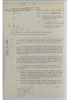
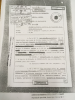
Telex P122, dated 17 June 1976, from the Embassy of Uruguay in the United States, transcribing a news cable with statements from Wilson Ferreira Aldunate on the political situation in Uruguay and the number of political prisoners.

Location: Department of Historical–Diplomatic Archives – Section: Embassy of the Oriental Republic of Uruguay in the United States / Series: Wilson Ferreira Aldunate / Year 1976 / Box 113 / Folder 28 / 1 page.

Statement by Wilson Ferreira Aldunate before the Subcommittee on International Organisations of the Committee on International Relations of the House of Representatives of the United States Congress, dated 17 June 1976, in which he denounces the authoritarian turn in Uruguay.

He denounces the dissolution of Parliament in 1973 and the creation of the Council of State. He mentions the murders of the legislators Zelmar Michelini and Héctor Gutiérrez Ruiz in Buenos Aires. He also exposes arbitrary uses of judicial power (confiscations prior to sentencing, prolonged imprisonment even after serving one’s sentence). Furthermore, he maintains that the Uruguayan guerrilla movement was dismantled in 1972 and that, since then, state repression has been directed against the population at large.

He provides figures: between 5,000 and 6,000 political prisoners at that time, and between 50,000 and 60,000 people detained or interrogated since the beginning of the dictatorship; he refers to widespread torture together with mass emigration (at least 300,000, perhaps up to 500,000 people). He highlights the country’s foreign debt and disproportionate security expenditure. He calls on the United States to cease all political, technical and financial support for the Uruguayan dictatorship and to “let the Uruguayans” restore their democracy.

Location: Historical–Diplomatic Archive Department – Section: Embassy of the Oriental Republic of Uruguay in the United States / Series: Wilson Ferreira Aldunate / Year: 1976 / Box 113 / Folder 28
Note No. 50-976(710), dated 23 June 1976, from the Consular Section of the Embassy of Uruguay in the Republic of Argentina, addressed to Ambassador Gustavo Magariños. It forwards Note 2-976-(482), dated 22 June 1976, from the Consulate, concerning a visit by the Nores Montedonico couple, who reported receiving phone calls regarding the situation of their daughter, María del Pilar Nores Montedonico.

Location: Department of the Historical and Diplomatic Archive – Section: Embassy of the Oriental Republic of Uruguay in Argentina / Series: Security Matters – Information on Individuals / Year 1976 / Box 3 Confidential Documents / Folder H3-2 Part II / 3 pages.

Memorandum, dated 2 July 1976, regarding the conduct to be undertaken in the context of “the Venezuela case” – the possible actions to be implemented and the analysis of the repercussions that each of them could imply for Uruguay from an international relations perspective. This document relates to the abduction of the Uruguayan citizen Elena Quinteros from the grounds of the Venezuelan Embassy in Montevideo on June 28, 1976.

There is a more legible copy of this document, although it is missing a page.

Version 2 - Location: Department of the Historical and Diplomatic Archive – “Administrative Investigation into the abduction of Elena Quinteros, established by R.M. No. 201/87 on August 11, 1987, and conducted by Dr Luján Flores de Sapriza – Single box / Piece 1 / Pages 74 to 81. Documentation donated by Dr Milton Romani.

Memorandum, dated 2 July 1976, regarding the conduct to be undertaken in the context of “the Venezuela case” – the possible actions to be implemented and the analysis of the repercussions that each of them could imply for Uruguay from an international relations perspective. This document relates to the abduction of the Uruguayan citizen Elena Quinteros from the grounds of the Venezuelan Embassy in Montevideo on June 28, 1976.

The document is missing its final page, which can be seen in another copy of the document.

Version 1 – Location: Administrative Archive – Section: Embassy of the Oriental Republic of Uruguay in Venezuela / Series: Documents compiled regarding the “Breaking of Diplomatic Relations with Venezuela” / Year 1976 / Box 3 / Incomplete document.

Telex C-367/24, dated 19 July 1976 (Clear), sent from the Embassy of Uruguay in Argentina (URUBAIRES) to the Ministry of Foreign Affairs (DIPLOMACIA). It reports enquiries made with police and military authorities regarding cases of detained Uruguayan citizens. The telex also details a query made by news agencies to this Embassy concerning the disappearance of thirty (30) Uruguayans.

Location: Department of the Historical and Diplomatic Archive – Section: Embassy of the Oriental Republic of Uruguay in Argentina / Series: Security Matters – Information on Individuals / Year 1976 / Box 3 Confidential Documents / Folder H3-2 Part I / 1 page.

Verbal Note D-497/76, dated 12 August 1976, from the Embassy of Uruguay in Chile, to the Special Affairs Department of the Ministry of Foreign Affairs of Chile, requesting overflight and landing permission for a Uruguayan Air Force plane. Attached is an application form detailing the date and flight details.

Location: Department of Historical–Diplomatic Archives – Section: Embassy of the Oriental Republic of Uruguay in Chile / Series: Related Correspondence / Year 1976 / Box 64 / Folder 4 / 2 pages.

This document is comprised of two parts. The first sheet is printed with the letterhead of Rio de Janeiro’s Serviço Nacional de Informações (National Information Service, SNI). It indicates that a list of subversive people wanted by the Uruguayan authorities is being sent to numerous Brazilian military agencies such as Rio de Janeiro’s Centro de Informações da Marinha (Navy Information Centre, CENIMAR) and Centro de Informações de Segurança da Aeroná (Aeronautics Safety Information Centre, CISA). The second sheet, signed by the Uruguayan army chief of staff General Luis Quierolo, requests that the people named on the list be captured for their links with subversive organisations. The sheet contains the name of each of the six people, together with their date of birth, their identity card number, and their most recent known address. The letter asks that the agents let the army’s general command know once the people have been arrested. The document is not signed.

This document contains a list of names of Argentine citizens who were being tracked down by the Argentine military and police authorities for having committed subversive acts. It requests that the said individuals must be immediately arrested and the agency must be informed of any citizens who are living in Brazil illegally. While those who are living in the country legally must be tracked down and kept under closed surveillance while the agency is being informed of their arrest. There are no individual signatures but a stamp can be seen at the bottom from the Brazilian military.

This search request corresponds to two Argentine citizens, Ricardo Luiz Franco and Maria Catalina Benassi, who were accused of belonging to a subversive organisation called the Ejército Revolucionario del Pueblo (People’s Revolutionary Army, ERP). Franco and Benassi were both living in Porto Alegre (Brazil) at the time. The document asks for the two Argentines to be tracked down and arrested and for further relevant information to be shared. The document is not signed but there is a stamp belonging to the Departamento de Ordem Política e Social (Department of Political and Social Order, DOPS) operating in the Brazilian state of Rio Grande do Sul.

Circular No. 24/76, dated 29 October 1976, issued by the Directorate for Foreign Policy Affairs. Attached is Special Press Release No. 21 from the Joint Forces, detailing the activities of the political group Partido Por la Victoria del Pueblo (Party for the Victory of the People; PVP) and the operation in which several members were detained.

Location: Department of the Historical and Diplomatic Archive – Section: Embassy of the Oriental Republic of Uruguay in Argentina / Series: Subversive Activities / Year 1976 / Box 2 / Folder A6-1 / 13 pages.

Circular No. 25/76, dated 5 November 1976, issued by the Directorate for Foreign Policy Affairs. Attached is Special Press Release No. 22 from the Joint Forces, continuing to report on the activities of the political party, Partido Por la Victoria del Pueblo (Party for the Victory of the People; PVP).

Location: Department of the Historical and Diplomatic Archive – Section: Embassy of the Oriental Republic of Uruguay in Argentina / Series: Subversive Activities / Year 1976 / Box 1 / Folder A1-2-1 / 15 pages.

The advising minister of the Brazilian Embassy in Buenos Aires in 1976, Marcos Camilo Cortes, reports that, former Brazilian president João Goulart’s coffin had crossed the international bridge to the Brazilian municipality of Uruguayaina and, from there, it would continue making its way to the Brazilian city of São Borja, according to the Brazilian consul in the Argentine city of Poso de los Libres. The consul added that everything had gone smoothly, including in Uruguayaina.

The advisory minister of the Brazilian Embassy in Buenos Aires in 1976, Marco Camilo Cortes, addresses the telegram to the Minister of Foreign Relations to whom she sends information about the passing of former Brazilian president João Goulart. News received by the consul in the Argentine city of Paso de los Libres, Ney Faria, suggests that the former president died from a heart attack while he was in Argentina, near the locality of Mercedes. Cortes writes that since necessary provisions are already being implemented, both via the consulate and directly at the frontier, he shall abstain from making an official contact with the Argentine authorities unless the Ministry instructs him to do so.

The advising minister of the Brazilian Embassy in Buenos Aires in 1976, Marcos Camilo Cortes, addresses the telegram to the Minister of Foreign Relations, notifying him of the arrival of former Brazilian president Goulart’s body to the Argentine city of Paso de los Libres. Cortes reports that the Brazilian consul in the city, Ney Faria, had confirmed that he had already actioned all the possible measures at his disposal but he wanted instructions from the Minister regarding the “delicate aspects of the case”. Cortes advises the Minister that, if he should choose to send special instructions to the consul Faria, that he send them via the Army’s radio due to the difficulties contacting Paso de los Libres via telephone.

Confidential Note 001/77, dated 21 January 1977, sent from the Embassy of Uruguay in the United States (URUWASHI) to the State Department of the United States, expressing the withdrawal of the proposed appointments of Colonel Fons and Major Gavazzo to positions to be held in that country.

Location: Department of the Historical and Diplomatic Archive – Section: Embassy of the Oriental Republic of Uruguay in the United States / Series: Confidential Notes / Year 1977 / Box 7 / Folder 5.

This report is addressed to the head delegate Dr. Silvio Pereira Machado. The unknown writer of this correspondence recounts that, on 15th April 1977, he or she accompanied two Argentine Federal Police officers to a meeting with the Colonel Felix de Souza in São Paulo under the request of the Argentine consul Julio Alfredo Freixas. The Argentine police asked for two Argentine citizens to be arrested while they were living in São Paulo. The unknown writer adds that on 19th April 1977, the Argentine police officers returned to Buenos Aires (Argentine), bringing two prisoners with them. The document is not signed.

Telex A107/B, dated 23 May 1977 (Clear), sent from the Ministry of Foreign Affairs (DIPLOMACIA) to the Embassy of Uruguay in Argentina (URUBAIRES), ordering an urgent enquiry into the whereabouts of Uruguayan citizen Andrés Humberto Bellizzi.

Location: Department of the Historical and Diplomatic Archive – Section: Embassy of the Oriental Republic of Uruguay in Argentina / Series: Consulate General / Year 1977 / Box 4 / Folder B1 / 1 page.

In this letter, the Chief of the DOPS, Sérgio Paranhos Fleury reiterates a previous request to the Argentine Consul in São Paolo. He asks for personal details such as the passport of Argentine citizen, Miguel Ángel Ricci, who at the time is being held at the DOPS detention centre in São Paolo. The letter is signed by Sérgio Paranhos Fleury, Chief of the DOPS.

In this document addressed to the US Secretary of State in Washington, the US Consul in Rio de Janeiro mentions the report filed by Argentine refugee Guillermo Cesar Torres Castaños to the UNHCR. Torres Castaños claims to have been kidnapped in Brazil, where he was later tortured by both local security forces and Argentine Federal Police officers.

Note 8-5/977(2111), dated 30 September, from the Uruguayan Ambassador in the Republic of Argentina to the Consul General of the Republic in Buenos Aires, acknowledging receipt of the note detailing the disappearance of the citizen Mario Roger Julien Cáceres. The note orders that no action be taken, on the grounds that his family is not of Uruguayan nationality.

Location: Department of the Historical and Diplomatic Archive – Section: Embassy of the Oriental Republic of Uruguay in Argentina / Series: Consulate General Reports / Year 1977 / Confidential Documents Box 1 / Folder H8-3 / 1 page.

This document records information about the governor of Brazil’s Rio Grande do Sul state, Leonel Brizola that the military attaché had received from the Uruguayan Secretaría de Informaciones de Estado (State Information Secretariat, SIDE). Since his arrival in Buenos Aires, Leonel had been staying in an apartment on Uruguay Street. On the day that the telegram was sent, Brizola was due to leave the apartment for Buenos Aires’ Ezeiza International Airport, where he would take the 8pm flight to New York with various stopovers along the way. The telegram comes from the Brazilian ambassador in Buenos Aires, Claúdio Garcia de Souza.

The telegram writes that the governor of Brazil’s Rio Grande do Sul state, Leonel Brizola, arrived in Buenos Aires the previous night according to press reports. The military attaché is already in contact with the corresponding Argentine organisations to carry out the necessary arrangements. As soon as the requested information is received, it will be sent straight to the Ministry. The telegram comes from the Brazilian ambassador in Buenos Aires, Claúdio Garcia de Souza.

The document recounts that Leonel Brizola and his companions did not embark on the Braniff flight to New York as originally planned. Rather, they later travelled on the flight no. 300 operated by  Aerolíneas Argentinas which covers the Buenos Aires- New York route, without the normal layover. The telegram is from Cláudio Garcia de Souza, Brazilian Ambassador to Argentina.

Note 2/977 - 1193, dated 29 September, from the District Consulate of Uruguay in Buenos Aires to the Consul General of the Republic in Buenos Aires, forwarding information received from the Argentine Federal Police’s Search Division for Disappeared People regarding Mario Roger Julién Cáceres and his family. The note details Julién Cáceres’s criminal record and his links to the “Tupamaros” Movement.

Location: Department of the Historical and Diplomatic Archive – Section: Embassy of the Oriental Republic of Uruguay in Argentina / Series: Consulate General Reports / Year 1977 / Confidential Box 1 / Folder E / 1 page.

Note 1068/977, dated 30 September 1977, from the Consulate General of the Republic in Buenos Aires to the Embassy of Uruguay in the Republic of Argentina, forwarding records of the disappearance of the Julien Grisonas family. The note details the complaint filed by Mrs. María Angélica Cáceres de Julien concerning the disappearance of her son and his family.

Location: Department of the Historical and Diplomatic Archive – Section: Embassy of the Oriental Republic of Uruguay in Argentina / Series: Consulate General Reports / Year 1977 / Confidential Documents Box 1 / Folder H8-3 / 3 pages.

Circular 57AD, dated 23 December 1977, from the Ministry of Foreign Affairs (DIPLOMACIA) to the Embassy of Uruguay in Argentina (URUBAIRES). It transcribes Communiqué No. 1,378 issued by the Joint Forces’ Press Office, reporting on the dismantling of a cell belonging to the Marxist Montoneros Movement in Uruguay.
The note orders that said information should be used to respond to any petitions or protests which arise in support of those involved.

Location: Department of the Historical and Diplomatic Archive – Section: Embassy of the Oriental Republic of Uruguay in Argentina / Series: Subversion / Year 1977 / Confidential Documents Box 2 / Folder H3-1 / 4 pages.

Circular 60AD, dated 29 December 1977, from the Ministry of Foreign Affairs (DIPLOMACIA) to the Embassy of Uruguay in Argentina (URUBAIRES), transcribing Communiqué No. 1,379 from the Joint Forces Press Office. The communiqué reports on the indictment of Argentine citizens, who were members of the Montoneros group in Uruguay.

Location: Department of the Historical and Diplomatic Archive – Section: Embassy of the Oriental Republic of Uruguay in Argentina / Series: Subversion / Year 1977 / Confidential Documents Box 2 / Folder H3-1 / 2 pages.

Circular 1AD, dated 2 January 1978, from the Ministry of Foreign Affairs (DIPLOMACIA) to the Permanent Mission of the Republic to the United Nations – Geneva (URUGI), transcribing Communiqué No. 1,380 from the Joint Forces Press Office. It reports on the operation which led to the death of the Argentine Barry–Mata couple, members of the Montoneros group.

Location: Administrative Archive – Section: Directorate of Special Affairs – Department of Human Rights / Series: Press Releases – DINARP Box 11B / Folder A / 1 page.

Note 4/78-0011, dated 5 January 1978, from the Ambassador of Uruguay in Brazil – General (Ret.) Eduardo Zubía, to the Minister of Foreign Affairs, Adolfo Folle Martínez. Attached is Confidential Circular Note No. 94 DCN/700 (846) from the Brazilian Ministry of Foreign Affairs, requesting the reciprocal application of Article 36 of the 1963 Vienna Convention on Consular Relations. This request arose from the detention of the Brazilian journalist Flavio Tavarez in Uruguay.

Location: Department of Historical–Diplomatic Archives – Section: Embassy of the Oriental Republic of Uruguay in Brazil / Series: Confidential Notes Sent / Year 1979 / Box 14 / Folder 3 / 2 pages.

The report records that, between 16th and 20th December 1977, the guerrilla group Montoneros held a meeting in Santos city situated in the Brazilian state of São Paulo. During this meeting, they discussed the operations to be carried out during the World Cup in Argentina. The Montoneros organisation is going to ramp up its operations during the World Cup, aiming to hijack the radio and television transmissions to spread messages against the Argentine government. The report is not signed.

Note H3-2/978 (723), dated 21 April 1978, from the Embassy of Uruguay in the Republic of Argentina to the Minister of Foreign Affairs, Dr. Alejandro Rovira, forwarding a copy of Official Note No. 317-978 from the Consulate General. The note reports on the inquiries carried out by the District Consulate in Buenos Aires concerning the disappearance of the Zaffaroni–Islas family.

Location: Department of the Historical and Diplomatic Archive – Section: Embassy of the Oriental Republic of Uruguay in Argentina / Series: Subversion – Information on Individuals / Year 1978 / Confidential Documents Box 3 / Folder H3-2 / 5 pages.

Circular 50/78, dated 27 November 1978, from the Directorate for Foreign Policy Affairs, addressed to the Heads of Mission. Attached are Press Releases Nos. 1,398, 1,399, and 1,400 from the Joint Forces Press Office.
Press Release No. 1,400 reports on the detention of Universindo Rodríguez Díaz and Lilián Celiberti Rosas (together with her young children) while attempting to enter the country.

Location: Department of the Historical and Diplomatic Archive – Section: Embassy of the Oriental Republic of Uruguay in Argentina / Series: Laws, Decrees, Resolutions, Circulars / Year 1978 / Box 1 / Folder A1-2-1 / 2 pages.

Note 4/78-1154, dated 1 December 1978, from the Ambassador of Uruguay in Brazil – Gen. (Ret.) Eduardo Zubía, to the Minister of Foreign Affairs, Adolfo Folle Martínez. Attached is Confidential Report No. 1050/978 from the Consulate General of Uruguay in Porto Alegre, concerning the disappearance of citizens Universindo Rodríguez and Lilián Celiberti.

Location: Department of Historical–Diplomatic Archives – Section: Embassy of the Oriental Republic of Uruguay in Brazil / Series: Confidential Notes Sent / Year 1979 / Box 14 / Folder 3 / 6 pages.

Circular 53/78, dated 5 December 1978, from the Directorate for Foreign Policy Affairs, addressed to Heads of Mission, attaching Press Release No. 1,401 from the Joint Forces’ Press Office.

The press release reports on an operation carried out in the city of Porto Alegre against the Partido por la Victoria del Pueblo (Party for the Victory of the People; PVP).
Location: Department of the Historical and Diplomatic Archive – Section: Embassy of the Oriental Republic of Uruguay in Argentina / Series: Laws, Decrees, Resolutions, Circulars / Year 1978 / Box 1 / Folder A1-2-1 / 4 pages.

Note H3-1/978 (2699), dated 18 December 1978, from the Embassy of Uruguay in the Republic of Argentina to the Minister of Foreign Affairs, Adolfo Folle Martínez, enclosing copies of Official Notes No. 1360-978, 1366-978, and 1374-978 from the Consulate General. These notes provide information about Uruguayan citizens living in the Republic of Argentina and the percentage of subversive agents among them.

Location: Department of the Historical and Diplomatic Archive – Section: Embassy of the Oriental Republic of Uruguay in Argentina / Series: Subversion / Year 1978 / Confidential Documents Box 3 / Folder H3-1 / 13 pages.

Note 4/79-0105, dated 1 February 1979, from the Ambassador of Uruguay in Brazil – Gen. (Ret.) Eduardo Zubía, to the Air, Military, and Naval Attachés assigned to the Embassy. The Ambassador reports on a meeting held by the Consul General of the Republic in Brazil, Hamlet Goncalvez, with Police Delegate, Dr. Fuques, who provided information on the arrival of Uruguayans from Europe with fake passports, as well as links to the ETA terrorist movement.

Location: Department of Historical–Diplomatic Archives – Section: Embassy of the Oriental Republic of Uruguay in Brazil / Series: Confidential Notes Sent / Year 1979 / Box 13 / Folder 5 / 4 pages.


Telex C106/21, dated 15 March 1979 (Clear and Ciphered), from the Embassy of Uruguay in Argentina (URUBAIRES) to the Ministry of Foreign Affairs (DIPLOMACIA), requesting instructions on how to proceed with search requests for citizens on the list of wanted individuals.

Location: Department of the Historical and Diplomatic Archive – Section: Embassy of the Oriental Republic of Uruguay in Argentina / Series: Information on Individuals / Year 1979 / Confidential Documents Box 3 / Folder H3-2 / 2 pages.

Memo N° 87/6/VII/979, dated 6 July 1979, submitted by the Navy Attaché of the Uruguayan Embassy in the Republic of Argentina to the Uruguayan Ambassador of said Diplomatic Mission, sending the military passport of Navy Lieutenant (CG) Jorge Tróccoli to process the visa extension due to his stay in Argentina. It moreover reports the forwarding of the certificate of stay issued by the Naval Mechanics School (ESMA), where the Navy Lieutenant is currently serving.

Location: Department of the Historical and Diplomatic Archive – Section: Embassy of the Oriental Republic of Uruguay in Argentina / Year 1979 / Box 7 / Folder G 7-5-1 “Officials of the Uruguayan Armed Forces granted scholarships in the Republic of Argentina.”

Telex A 120, dated 1 August 1979, sent from the Uruguayan Embassy in Chile (URUSANTI) to the Ministry of Foreign Affairs (DIPLOMACY) informing the dissemination of an allegation regarding the abduction and subsequent re-appearance in the city of Valparaíso of the children Anatole and “Lucía” Victoria Julien Grisonas.

Location: Department of the Historical and Diplomatic Archive – Section: Embassy of the Oriental Republic of Uruguay in Chile / Series: Telex / Year 1979 / Box 19 / Folder 9.

Note A-547/79, dated 2 August 1979, from the Embassy of Uruguay in Chile, to the Minister of Foreign Affairs, Adolfo Folle Martínez. It reports on the press coverage when the organisation “Clamor” announced the kidnapping of the children Anatole and Eva Lucía Julien Grisonas and their subsequent appearance in the city of Valparaíso.

Location: Department of Historical–Diplomatic Archives – Section: Embassy of the Oriental Republic of Uruguay in Chile / Series: Related Correspondence / Year 1979 / Box 7 / Folder 8 / 1 page. 

Note A-580/79, dated 10 August 1979, from the Embassy of Uruguay in Chile, to the Minister of Foreign Affairs, Adolfo Folle Martínez. The Embassy reports a visit by Julio Zaffaroni and his wife, who came to file a complaint against the disappearance of their son and his family in Buenos Aires in 1976. They also stated that they had travelled to Chile to search for their granddaughter, Mariana Zaffaroni, after learning of statements by Anatole Julien Grisonas, a child who recently appeared in Valparaíso.

Location: Department of Historical–Diplomatic Archives – Section: Embassy of the Oriental Republic of Uruguay in Chile / Series: Related Correspondence / Year 1979 / Box 7 / Envelope 8 / 2 pages.

Diplomatic Circular No.18, dated 14 August 1979, from the Ministry of Foreign Affairs and Worship of the Republic of Argentina, addressed to accredited diplomatic missions in Argentina - Buenos Aires, reiterating the request made in Circular No. 27, dated 12 July 1976.
The circular requests an updated inventory of weapons and ammunition held by each mission, along with a list of all personnel assigned to security-related roles.
A Pass Protocol is attached for the attention of the Military, Naval, and Air Attachés.

Location: Department of Historical–Diplomatic Archives – Section: Embassy of the Oriental Republic of Uruguay in Argentina / Series: Diplomatic Circulars / Year 1979 / Box 1 / Folder A10-2 / 7 pages.

Telex C384/14, dated 12 September 1979 (Clear and Ciphered), from the Embassy of Uruguay in Argentina (URUBAIRES) to the Ministry of Foreign Affairs (DIPLOMACIA), reporting on a press note that mentions the arrival of a group of Uruguayan citizens seeking to meet with the Executive Secretary of the OAS’ Inter-American Commission on Human Rights, Dr. Vargas Carreño. The purpose of the meeting is reportedly to denounce the disappearance of Uruguayan citizens in the Republic of Argentina.

Location: Department of Historical–Diplomatic Archives – Section: Embassy of the Oriental Republic of Uruguay in Argentina / Series: Human Rights / Year 1979 / Confidential Documents Box 2 / Folder H1-26 / 2 pages.

Telex UY827, dated 10 October 1979 (Clear and Ciphered), from the Ministry of Foreign Affairs (DIPLOMACIA) to the Embassy of Uruguay in Argentina (URUBAIRES), transmitting Circular CT24/26 G. The Ministry requests that the Embassy provide a list of Uruguayans living in Argentina with “records of engaging in activities against our country.”

Location: Department of Historical–Diplomatic Archives – Section: Embassy of the Oriental Republic of Uruguay in Argentina / Series: Laws, Decrees, Resolutions, Circulars / Year 1979 / Confidential Documents Box 3 / Folder H9 / 2 pages.

Note 511/79-1271, dated 16 October 1979, from the Ambassador of Uruguay in Brazil – Gen. (Ret.) Eduardo Zubía, to the Consuls General of the Republic in Brazil. The Ambassador forwards Circular C24/26G, requesting the Consuls to provide a list of Uruguayans residing in their jurisdictions who are involved in activities against Uruguay.

Location: Department of Historical–Diplomatic Archives – Section: Embassy of the Oriental Republic of Uruguay in Brazil / Series: Confidential Notes Sent / Year 1979 / Box 13 / Folder 6 / 3 pages.


This report explains the attempts by numerous Argentine and Brazilian agents to arrest two Argentine women in the Brazilian city of Uruguaiana bordering Argentina. Although the names are crossed out, it is possible to tell from the dates and mentioned places that the cases refer to Cristina Fiori (whose name has not been crossed out towards the end of the document) and Margarita Mengol. Fiori was detained in an operation by several Uruguayan civil police agents and one Argentine police officer on 17th November. While Mengol was arrested on 27th November, before being able to travel to Spain, where she was a national. The report states that the police delegate in Uruguiana confirmed that there was proof that the operation on 17th November was apparently “illegal”. There is no signature.

This document is composed of three parts. The first of which is a note from the Permanent Mission of Uruguay before the Organization of American States (O.A.S.) dated April 1981.The note is sending the Ministry of Foreign Affairs in Montevideo a copy of an article written by the Inter-American Commission of Human Rights in relation to Case No.4529. The second part is a note dated December 1980 containing the observations of the claimant of Case No.4529 (Celiberti and family). The note transmits a copy of the sworn declaration delivered by the former soldier Hugo García Rivas in Brazil in May 1980. The third part of the note contains the declarations delivered by the soldier Garcías Rivas in São Paulo, Brazil before the NGO Secretariado Internacional de Juristas por Amnistía en Uruguay (International Secretariat of Jurists for Amnesty in Uruguay). In these declarations, García Rivas offered a detailed account of the operation involving the capture of Liliana Celiberti, Universindo Rodríguez, and Lilian’s daughters. After recounting how the operation led to the capture of the Uruguayans in Porto Alegre, García Rivas touched on other topics, including the case of Hugo Pascaretta who was assassinated while being tortured. The document is signed off without a printed name by a representative of the Uruguayan Permanent Mission.